The Braderie de Lille in Figures: Records, Attendance and Anecdotes
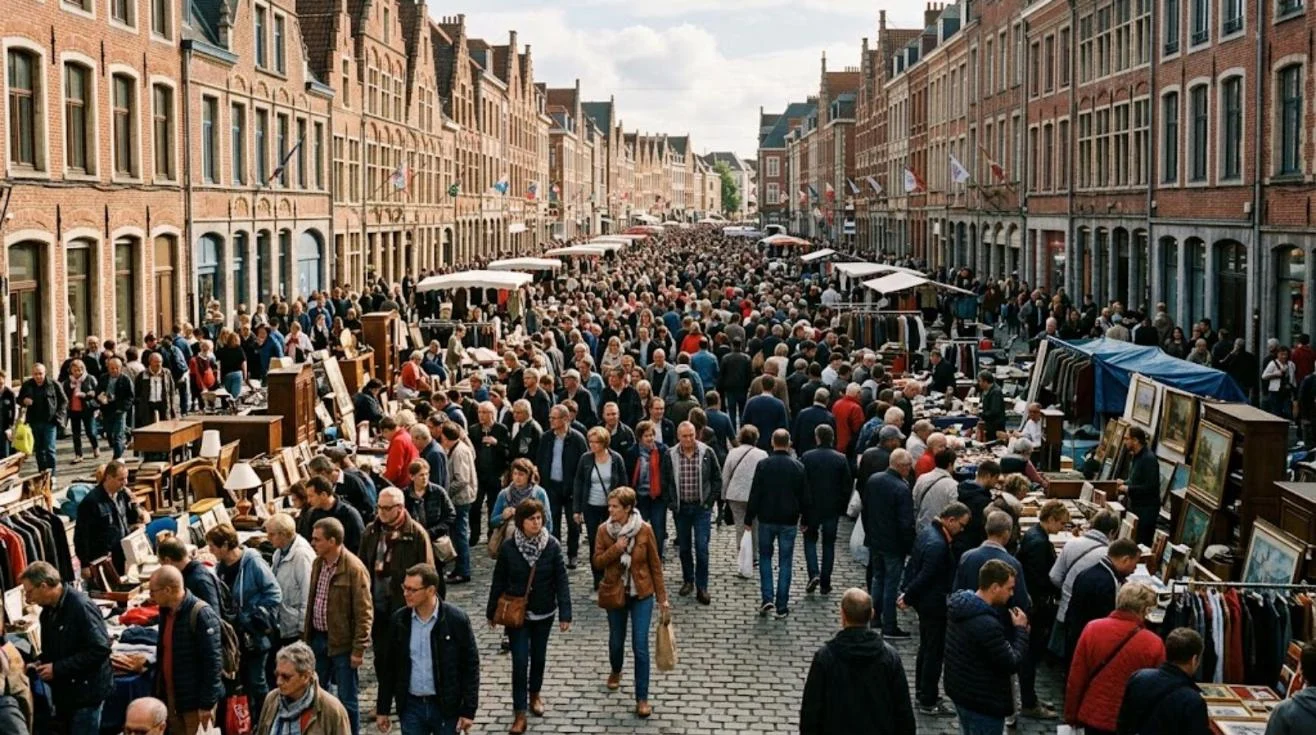
The Braderie de Lille in figures
The Braderie de Lille is much more than a simple flea market. It is a cultural, economic and human phenomenon that beats every European record. Here are the key figures that show the scale of this one-of-a-kind event.
Attendance and crowds
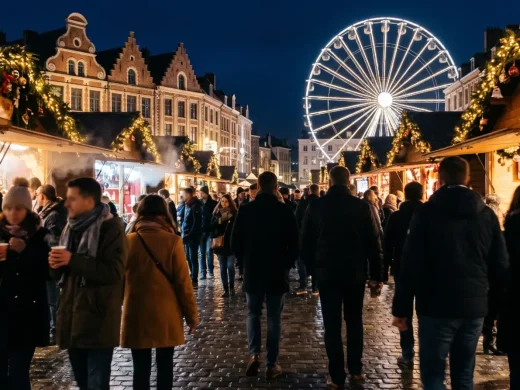
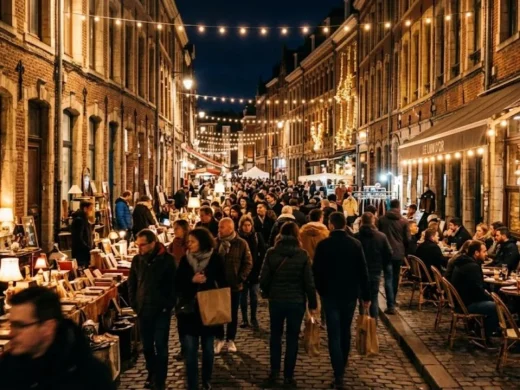
Every first weekend of September, the capital of Flanders welcomes over 2.5 million visitors (2026 figures from the Ville de Lille) in just 34 hours. That is the equivalent of 10 times the population of Lille proper. The Braderie is thus the biggest popular gathering in France and the biggest flea market in Europe.
Visitors come from all over France, but also from Belgium, the Netherlands, the United Kingdom and Germany.
Exhibitors in figures
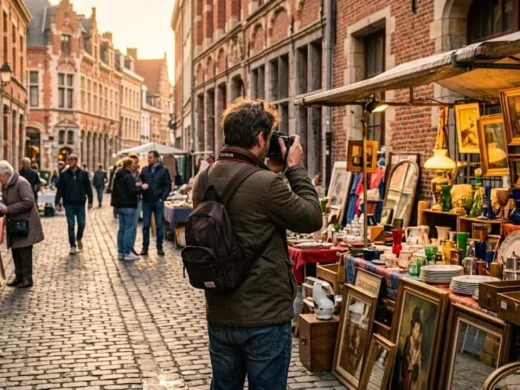
In 2026, the Ville de Lille counted 5,425 exhibitors (2,769 residents’ stalls, 1,877 shops, 514 dealers and antique dealers), who set up on Lille’s pavements every year. They are a mix of professionals (flea market dealers, antique dealers) and private individuals clearing out their attics. The stalls stretch over 53 km (2026 figures from the Ville de Lille).
The most popular areas are Vieux-Lille (antiques and collectibles), rue de Béthune (the commercial heart), Wazemmes (a lively, multicultural atmosphere) and Solférino (student-friendly, festive flea market).
Food: the moules-frites festival
Tradition has it that you eat moules-frites (mussels and chips) during the Braderie. And the figures are dizzying:
- around 500 tonnes of mussels are said to be eaten over the weekend (a frequently quoted estimate)
- 30 tonnes of chips go with the mussels
- More than 200 restaurants take part in the traditional contest for the highest pile of shells
- The piles of shells outside restaurants can reach 2 to 3 metres in height
On top of this come thousands of litres of beer, and dozens of stalls serving carbonade flamande (Flemish beef and beer stew), welsh (a local dish of ham, cheese and beer, served melted) and other regional specialities.
Economic impact
The Braderie de Lille is one of the busiest weekends of the year for the local economy. The economic benefits spread across the whole Lille metropolitan area: hotels, restaurants, transport and shops.
Hotels in and around Lille are often fully booked over Braderie weekend. Bookings sometimes open 6 months ahead for city-centre hotels.
Transport and logistics
To handle such an influx, the city and the metropolitan authority deploy considerable resources:
- 200 hectares of the city centre are closed to car traffic
- The metro and tram run non-stop for 34 hours (all night from Saturday to Sunday)
- More than 600 staff from the Ville de Lille mobilised in 2026, including 145 municipal police officers, and 16 first-aid posts (figures from the Ville de Lille)
- 13 park-and-ride (P+R) car parks listed in 2026 by the tourist office, open to holders of a valid Ilévia ticket
- 384 tonnes of waste were collected in 2026 (Ville de Lille)
Why is the Braderie de Lille the biggest in Europe?
- Its scale: millions of visitors in a single weekend and kilometres of pavement taken up by exhibitors, private individuals and professionals alike (see the figures above).
- Its age: its origins go back to the Middle Ages, when Lille’s servants were allowed to sell their masters’ used goods once a year. Our history of the Braderie page traces this evolution.
- Its format: a free event open to everyone, running non-stop from Saturday to Sunday, night included, with concerts, a funfair (foire aux manèges) and the moules-frites tradition.
A history of almost 900 years
The Braderie de Lille was not born yesterday. Its origins go back to the 12th century, with the first written mention dating from 1127. At the time, valets and servants had the right, once a year, to sell their masters’ used clothes and belongings. This tradition was called the Franche Foire.
The word “braderie” is said to come from the Flemish braaden (to roast), a reference to the roast chickens sold at the fair from 1446. Since then, the event has kept growing to become the unmissable start-of-term date in the calendar.
What about the half marathon?
The Lille half marathon was run during the Braderie weekend for many years. It has since moved to another time of year: the 2026 Lille marathon and half marathon is scheduled for Sunday 25 October. More on our half marathon page.
Some records and anecdotes
- The Braderie was cancelled in 2016 (terrorist threat), then in 2020 and 2021 (Covid-19)
- Some attendance estimates have gone as high as 3 million visitors (a figure not officially confirmed)
Braderie de Lille 2027: the figures to remember
For the 2027 edition, announced for 4 and 5 September by the City of Lille, here are the figures to remember:
- Dates: Saturday 4 September 8 am to Sunday 5 September 6 pm (2026 hours)
- Duration: 34 hours non-stop
- Exhibitors: 5,425 in 2026
- Visitors: over 2.5 million in 2026
- Length of stalls: 53 km in 2026
- Entry: free
Read also
- Braderie de Lille 2027 dates
- Practical information for the Braderie
- Park-and-ride (P+R): where to park
- Beyond the mussels: the food
- Smart budget: how much to plan for
- Guide for seniors and accessibility
- Saturday night: late-night events and concerts
Never miss a thing about the Braderie de Lille
Dates, map, pitches and good deals: get Braderie de Lille news straight to your inbox.