The Most Sought-After Antiques at Flea Markets This Year: the List
The short answer: the antiques most sought after at flea markets are advertising items (enamel signs), Scandinavian furniture from the 1950s to the 1970s, 1970s ceramics, vintage audio equipment, Arcopal and Pyrex tableware, designer lighting, antique mirrors, bistro chairs, artist jewellery and vintage toys. At the Braderie de Lille (4 and 5 September 2027) you will find them with antique dealers, professional traders and on residents’ stalls.
Flea markets are full of antiques that collectors and vintage lovers are desperate to get their hands on. Here is the list of the most sought-after pieces this year, to look out for on the stalls of the Braderie de Lille (the Lille flea market) as well as at car boot sales and village vide-greniers. This page deliberately gives no price range or “market value”: without a verifiable, dated source, such figures mean nothing.
1. Vintage advertising items
Old advertising items are enjoying a revival. Enamel signs, display stands and illuminated signs, especially those linked to old car, chocolate or drinks brands, are in high demand. Their distinctive graphics and rarity make them centrepieces for collectors.
2. Scandinavian designer furniture
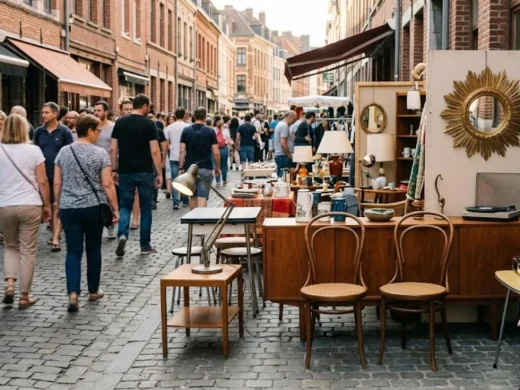
Scandinavian furniture from the 1950s to the 1970s is very much in vogue. Designs by the likes of Hans Wegner, Arne Jacobsen and Finn Juhl are particularly sought after. Their pieces, often identified by labels or stamps from makers such as Fritz Hansen, France & Søn or Getama, stand out for their careful craftsmanship and impeccable finish.
3. 1970s ceramics
Ceramics from the 1970s are making a big comeback. Work from the Accolay, La Borne and Vallauris workshops is highly prized. Their matt glazes, sturdy textures and varied techniques appeal to collectors. Check the signature or stamp underneath: depending on the workshop, it may be incised, stamped or painted.
4. Vintage audio equipment
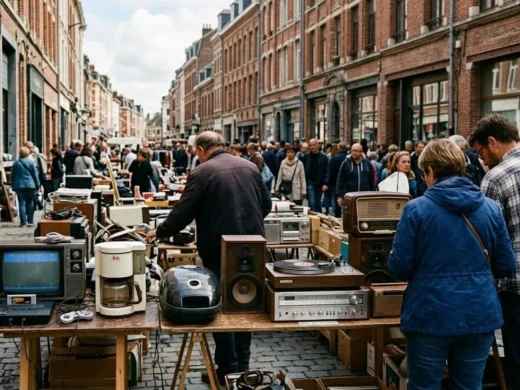
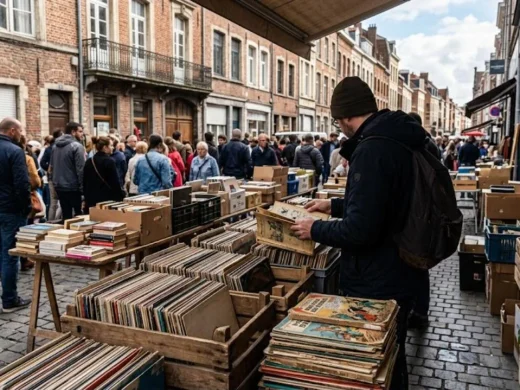
With the strong return of vinyl, vintage audio equipment is in great demand. High-end turntables such as the Thorens TD124, Garrard 301/401 or EMT, along with valve amplifiers from Quad, McIntosh and Marantz from the 1960s and 1970s, are reference names among enthusiasts.
5. Vintage tableware
Vintage tableware, notably floral Arcopal sets and colourful Pyrex dishes from the 1950s to the 1970s, is enjoying renewed interest. Arcopal’s Lotus and Veronica collections, as well as Pyrex’s Butterfly Gold and Snowflake patterns, are especially sought after.
6. Designer lighting from the 1950s and 1960s
Designer lighting from the 1950s and 1960s, such as Serge Mouille wall lights or industrial pendant lamps, remains in strong demand. Pieces with their original patina are particularly appreciated. Check the quality of the materials and joints when buying.
7. Antique mirrors
Antique mirrors, especially Louis-Philippe or Art Deco styles with a gilded frame, are highly prized for their elegance and, in good condition, their rarity.
8. Wooden bistro chairs
Wooden bistro chairs, timeless and sturdy, are sought after for their vintage charm, a popularity that shows no sign of fading.
9. Artist jewellery
Jewellery created by artists, somewhere between art and fine jewellery, is attracting growing interest. Pieces signed by renowned designers, such as Alexander Calder or Claude Lalanne, are particularly sought after for their originality and artistic value.
10. Vintage toys
Vintage toys, such as porcelain dolls, die-cast metal cars or wooden figurines, are sought after for their authenticity and nostalgic value, especially when rare, complete and from an iconic brand. See also our guide to vintage toys and Lego.
What should you look at, and how do you spot a copy?
| Category | What to look at | How to spot a copy or a doubtful piece |
|---|---|---|
| Enamel signs and advertising items | Brand, graphics, enamel chips, wear consistent with age | A piece that is too perfect or artificially aged; enamel and drilled holes with no wear at all |
| Scandinavian furniture | Maker’s label or stamp (Fritz Hansen, France & Søn, Getama), quality of the joints | No mark, approximate finish; note that some models are officially reissued, so check the manufacture date |
| 1970s ceramics | Signature or stamp underneath, consistency with the workshop (Accolay, La Borne, Vallauris), glazes | A signature that is too crisp, badly placed or at odds with the workshop’s style |
| Audio equipment | Maker’s plate, serial number, original parts, working order tested before buying | Replaced parts, components from another model; ask what has been serviced |
| Arcopal and Pyrex tableware | Mark underneath, pattern, chips and scratches | Pattern recently reproduced, mark missing or different from the original |
| Designer lighting | Patina, state of the wiring and joints, stamp | Heavily copied models: lightweight materials, uniform finish, no mark |
| Antique mirrors | Original glass and gilding, back of the frame | Gilding too bright and even, back made of a recent panel |
| Bistro chairs | Solid legs and joints, any maker’s mark | New wood made to look old, modern screws visible |
| Artist and antique jewellery | Maker’s signature, hallmarks on precious metals, certificate or invoice | No hallmark on a piece said to be gold or silver; a signature you cannot tie to any provenance |
| Vintage toys | Brand, original box, complete parts | Repainting, replacement parts, a box from another model |
How do you check an antique before buying it?
Signatures and marks: look underneath, under the base or on the side; a lone signature proves nothing unless it fits the style of the piece.
Hallmarks: items in gold, silver or platinum must carry two marks, a guarantee hallmark certifying the fineness and the mark of the professional who made or imported them (a lozenge for a maker, an oval for an importer), according to French customs. The minimum fineness to use the name is 375 thousandths for gold, 800 for silver and 850 for platinum. An item that is merely “silver-plated” is not solid silver.
Condition: look for cracks, restoration, rust and replaced parts; run a finger along the edges of ceramics and test equipment plugged in where possible. Poor condition can be negotiated; a hidden fault cannot.
Paperwork: for a major purchase, ask for an invoice describing the item (nature, stated period) and photograph it before paying. For valuable pieces, an expert or auctioneer remains the only serious way to get a valuation.
Where can you find these items at the Braderie de Lille?
The Braderie de Lille brings together antique dealers, professional traders and thousands of private sellers. Depending on what you are after:
- dealers’ pieces, silverware, porcelain and antique jewellery: the antiques collectors’ guide;
- furniture, mirrors, lighting and chairs: home décor and vintage furniture;
- toys: vintage toys and Lego;
- choosing your area: the Braderie map.
Dates: Saturday 4 and Sunday 5 September 2027, announced by the City of Lille (see dates and hours; the 2027 hours have not been announced yet). To negotiate and get organised, read the bargain hunting guide, and find everything else on the guide’s home page.
Frequently asked questions about antiques at flea markets
Which antiques are most sought after at flea markets?
Advertising items, Scandinavian furniture from the 1950s to the 1970s, 1970s ceramics, vintage audio equipment and Arcopal or Pyrex tableware come up most often. Designer lighting, mirrors, bistro chairs, artist jewellery and vintage toys complete the list.
How can you tell whether an antique is a copy?
Look for the maker’s mark or signature, check that the wear is consistent with the age, and be wary of a piece that looks too perfect. For precious metals, check the hallmarks. For a valuable piece, ask for a detailed invoice and, if needed, an expert’s opinion.
Which hallmarks should you find on jewellery or silverware?
Items in gold, silver or platinum normally carry a guarantee hallmark certifying the fineness and the mark of the responsible professional. The minimum finenesses are 375 thousandths for gold, 800 for silver and 850 for platinum (French customs).
Where can you find antiques at the Braderie de Lille?
With professional antique dealers and traders, on private sellers’ stalls and in the streets of several central districts. Read our antiques guide and check the map to pick your areas before the weekend of 4 and 5 September 2027.
How much is an antique worth?
We do not give market values: worth depends on condition, authenticity, rarity and timing. For a reliable valuation, compare documented recent sales or consult an expert or auctioneer.
Updated on 12 November 2026 by the guide’s editorial team.
Sources
- Antiques that will be snapped up (in French) – Passion Brocante
- 10 vintage items from your attic (in French) – Journal des Seniors
- French customs (in French): marking rules for precious metals
Never miss a thing about the Braderie de Lille
Dates, map, pitches and good deals: get Braderie de Lille news straight to your inbox.