Braderie de Lille vs Puces de Saint-Ouen vs Europe’s Flea Markets: A Comparison
The Braderie de Lille bills itself as the biggest flea market in Europe. But what really sets it apart from the Saint-Ouen flea markets in Paris, Amsterdam’s Waterlooplein or Madrid’s Rastro? Here is a full comparison to help you choose your next big flea-market adventure.
Braderie de Lille: the seasonal giant
When: one single weekend a year (the first weekend of September). 2027: 4-5 September.
Size: 53 km of stalls, 5,425 exhibitors and over 2.5 million visitors in 2026 (figures from the Ville de Lille).
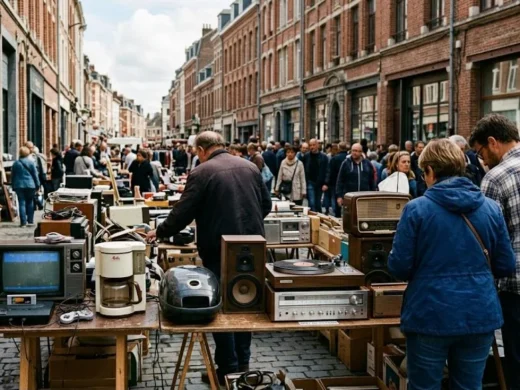
Speciality: a unique mix of private garage sales, dealers and professional antique dealers.
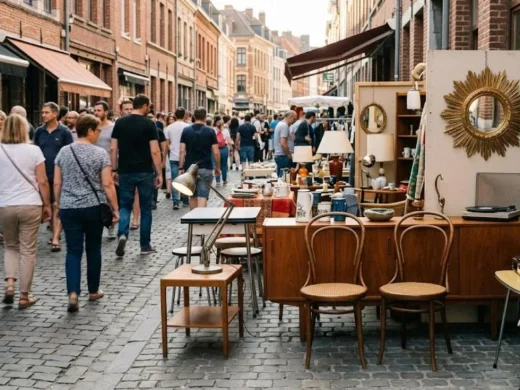
Atmosphere: festive, popular, foodie (moules-frites!). A cultural event as much as a market.
Prices: very variable, from items costing a few cents at private sellers’ stalls to pieces worth several thousand euros from professional antique dealers.
Strong point: its unique scale and the festive, down-to-earth atmosphere. Nothing else in Europe compares.
Weak point: only available 2 days a year. The quality of your finds depends a lot on luck and timing.
Puces de Saint-Ouen (Paris): the permanent prestige market
When: every Saturday, Sunday and Monday, all year round.
Size: 15 separate markets, 2,500 professional traders, 100,000-180,000 visitors per weekend.
Speciality: high-end professional antique dealers, prestige furniture, art and decoration.
Atmosphere: more commercial and touristy. Less festive than Lille.
Prices: generally higher than in Lille, as the professionals know exactly what their pieces are worth.
Strong point: open all year, a concentration of very high-level antique dealers, exceptional pieces.
Weak point: few private garage sales and few “real” unexpected bargains.
Waterlooplein (Amsterdam): the permanent Dutch market
When: every day except Sunday, all year round.
Size: around 300 permanent traders.
Speciality: general flea market goods, second-hand clothes, books, everyday items.
Atmosphere: relaxed, cosmopolitan, typically Dutch.
Prices: reasonable, with possible bargains on clothes and books.
Strong point: convenient (reachable by tram from the centre), ideal for a stopover of a few hours.
Weak point: modest size, few quality antiques.
El Rastro (Madrid): the Spanish Sunday market
When: every Sunday morning and on public holidays, all year round.
Size: several hundred sellers along the streets of the La Latina district.
Speciality: general flea market goods, souvenirs, Spanish crafts.
Atmosphere: festive, popular, the quintessential Madrid Sunday.
Prices: low to medium, with good deals on local crafts.
Strong point: the unique atmosphere and the way it is woven into Madrid’s social life.
Weak point: fewer quality antiques, and plenty of fakes and tourist souvenirs.
Our verdict
No European flea market is like the Braderie de Lille. Its unique character comes from a combination of factors found nowhere else: the sheer scale (53 km of stalls in 2026), the mix of private sellers and professionals, the festive, food-loving atmosphere, and the feeling that a whole city turns into a funfair for a whole weekend.
If you are looking for prestige antiques available all year round: Saint-Ouen. If you want the most festive and biggest flea-market experience in Europe: Braderie de Lille 2027, on 4 and 5 September. No hesitation.